
EMPLOYEE INTERVIEWS

Technical Artist

A Technical Artist transforming game worlds with light and shadow

Joined in 2025

Technical Artist D.T.

\ Career Path /

Handled lighting for AAA games at her previous company.
Joined SEGA in search of new career challenges.
Hosted a 4-part in-house lecture on lighting for artists.
Currently works on improving the Hedgehog Engine's lighting features and tooling in parallel with her normal projects.
01STEP 1
02STEP 2
03STEP 3

Q1
What I Studied

I majored in computer animation at an art college in the U.S., which is where I grew up. While many of my classmates focused on character animation, I fell in love with how lighting and environmental effects could build atmosphere. The field was a good fit for me, since I'd been interested in meteorology and nature since I was a kid. After graduation, I got a job as a lighting technical artist at a big animation studio, then moved over to the game industry. As a longtime fan of Japanese games, I had always hoped to work for a game company in Japan, and I jumped at the opportunity when it arose.

Q2
Why I Joined SEGA

I worked for several game companies in Japan, handling the lighting for a number of AAA titles. When I was looking for my next challenge, I decided to join SEGA. At the time, they were revamping their in-house game development engine, the Hedgehog Engine, and I was excited to be part of that transformation. Sonic the Hedgehog is incredibly popular in the U.S.! Plus, I have fond memories of playing SEGA's games as a kid, so getting the offer to work here felt like a dream.

Q3
My First Assignments at SEGA

One of my first tasks was to create and present a guide to modern game lighting for the division. The plan was just to hold a single seminar, but I got so into it that the document grew to 100 pages and I had to turn it into a 4-part lecture. My boss joked it could be a book! I wanted our team to take away more than just technical knowledge—I wanted them to understand that lighting can make our games resonate more deeply with players. The lecture series was just the first step in spreading that awareness.

Q4
Biggest Surprise After Joining SEGA

I expected SEGA to have a strict hierarchy, but that wasn't the case at all! I've even met the developers of the games I played as a kid, and they're all very down-to-earth people. It makes for a nice work culture where we can freely share ideas. We've got a lot of foreign talent here, and we're able to make some truly exciting games because SEGA is happy to take on suggestions from developers with different perspectives.
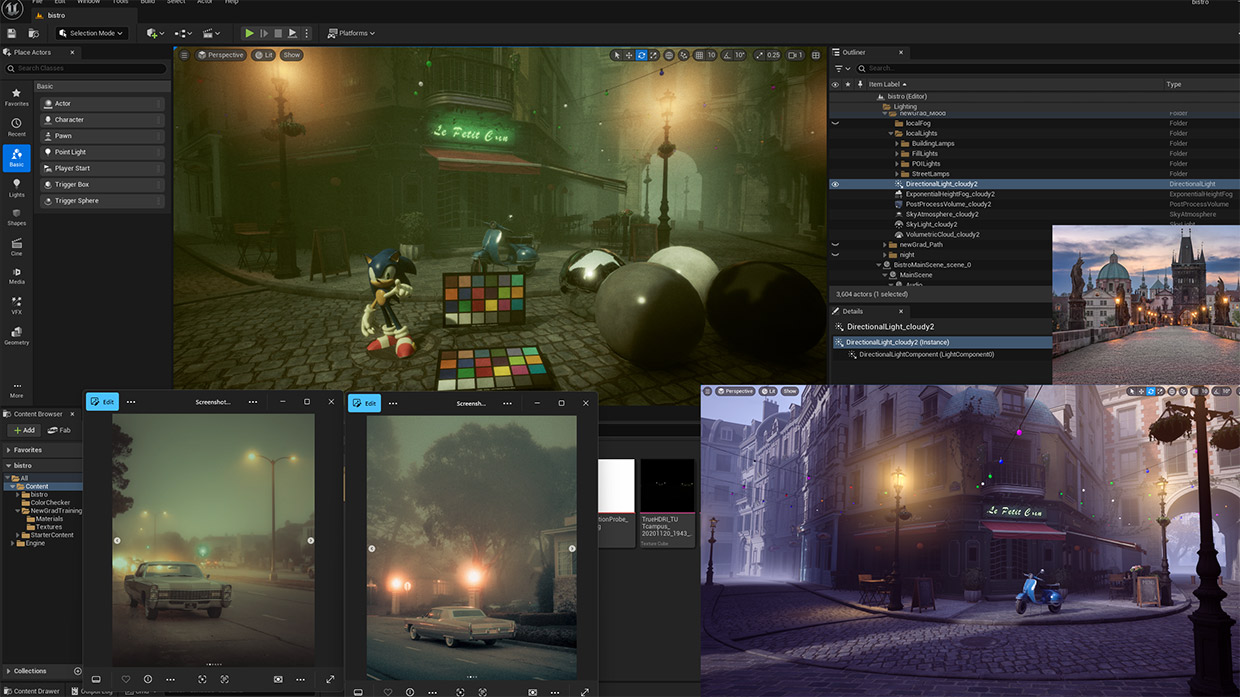
Demonstration at a lecture for new employees showing how changes in lighting can alter the mood of a scene

Q5
Current Duties

I have two primary responsibilities. The first is working with the engine team on improving the lighting features and tooling for the Hedgehog Engine. In addition to its use in AAA titles, we use the engine for arcade, VR, and even mobile games. I'm always looking into not just the latest technologies, but also how to make lighting look as good as possible on all kinds of different devices. My second responsibility is consulting and lighting supervision for various project teams. During pre-production, I offer lighting suggestions that help establish the look of the world for different games.

Q6
Motivation and Successes

The most rewarding aspect of my job is when I hear from non-artists that they could see a really positive impact from giving more attention to the lighting in their game. We shouldn't be displaying environments with fixed lighting. As players explore, the lighting and colors need to change for different environments, to evoke different moods. Making that look natural requires subtlety. I makes me really happy when I hear that improving the lighting has made the game better. It gives me confidence that players will be truly immersed in and moved by our games.

Q7
Future Goals

I want to strengthen our lighting team so we can support the whole division! SEGA games have always been colorful and striking. They grab your attention. I believe that if we've got great lighting to enhance those worlds, SEGA's games can become even more immersive. That's why I'd love to create a passionate team with a mix of both technically minded and artistic developers that can raise the quality of SEGA games across the board and embed the importance of lighting in the culture here.

Q8
SEGA's Appeal

SEGA has lots of robust IPs, so there are constantly new opportunities here. With the big changes we're making to the Hedgehog Engine and our lighting workflow, it's truly an exciting time to help shape the tools that will help create the next generation of games. As someone who came to SEGA seeking a new challenge, I felt like the work environment exceeded my expectations.

Q9
Message to Applicants

Do you stop to admire a beautiful sunset? I personally am very sensitive—I get emotional about the things I see around me. Being a technical artist requires technical knowhow, but it's especially important to think deeply about how to deliver scenes that resonate emotionally with players. Don't worry about having all the skills right away—you can learn the ropes after joining. If you're passionate about beauty in the natural world or what makes a scene in a movie compelling, come join me!

Q10
A Recent Highlight

I've been in charge of teaching new hires about lighting. It's a tremendous privilege to train the next generation of talent, and it's so fulfilling to know that my knowledge and experience can help shape the future.

A Typical Day

8:00 AM 
Arrive at the office
8:30 AM 
Check email, arrange tasks
10:00 PM 
Prepare lighting reports for each project
11:00 AM 
Meeting
12:30 PM 
Lunch break (Often with friends from other departments)
1:30 PM 
Lighting work, tool debugging, troubleshooting
3:00 PM 
Coffee break at the company cafe
3:30 PM 
Project meeting
5:30 PM 
Leave the office (Pick up my 3 kids from daycare and elementary school)
[an error occurred while processing this directive]