
\ Career Path /
Found a sense of fulfillment in playing a support role in the entertainment industry.
Felt SEGA's dedication to quality through the troubleshooting process.
Shares insights and resources with SEGA's project teams.
Q1Before Joining SEGA
I previously worked for an indie game publisher, where I developed game dev tools and programmed features to bring Japanese titles to the international PC gaming market. I also handled localization tasks, such as fixing corrupted text and implementing language-selection menus. Earlier in my career, I studied audio engineering and worked at a live music venue. Supporting the technical aspects that go into entertainment personally suits me better than being in the spotlight.

Q2Why I Joined SEGA
Everything started with a message from a recruiter. The role involved supporting creative productions from a technical perspective, so it immediately grabbed my interest—and I grew up playing SEGA games, so I really didn't want to miss out on a chance to work there. I was also impressed by the passion of SEGA's legendary sound designer, Takenobu Mitsuyoshi, in an interview I'd seen. It made me want to work alongside people like him.
Q3My First Assignments at SEGA
The first thing I was asked to do here was look into a sound-buffering issue happening in one of our rhythm games. Audio latency differs depending on the PC environment, and since rhythm games demand impeccable timing, this wasn't an issue we could overlook. Drawing on my background in audio engineering, I found the cause and helped implement a fix. In the process of all this, I really felt SEGA's commitment to quality. They wanted to fix anything that felt off, no matter how minor, before release to make sure players had the best possible experience.
Q4Biggest Surprise After Joining SEGA
When I was a kid, I had always associated SEGA with creative risks and originality, but before joining, I was a little worried that image would no longer hold up. Since joining the company, though, I've met many of the employees behind those legacy titles, and their eyes light up whenever they talk about them. That passion for games and creating fun experiences still runs deep here. I found it such a welcome surprise to learn that SEGA still has the same fire coursing through its veins.
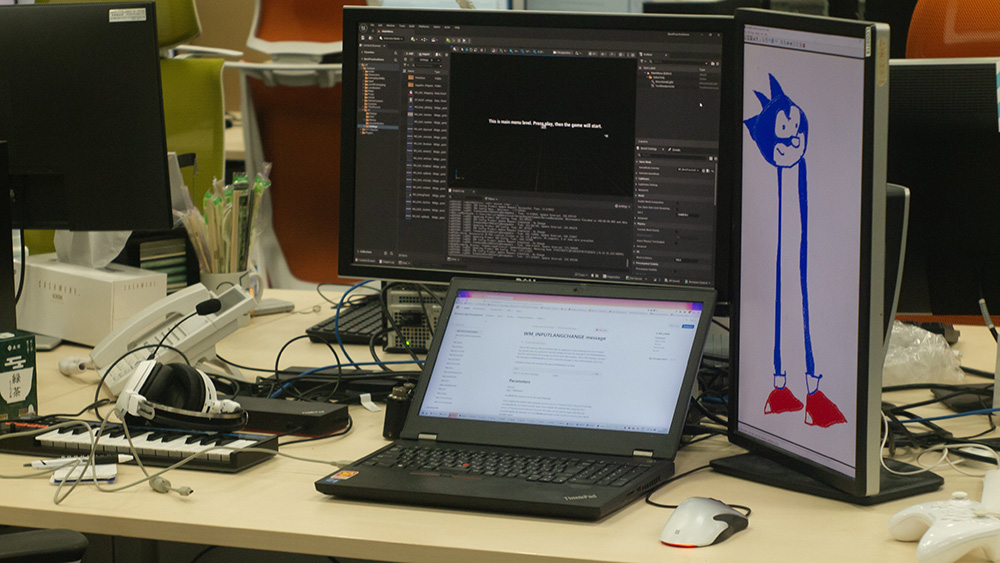
B.L.A.'s desk full of peripherals for testing different PC setups
Q5Current Duties
I provide technical help to development teams creating PC versions of their titles. I look into things unique to the PC version like multi-monitor and ultrawide-monitor support, regional keyboard layouts, and language settings, then offer guidance and sample programs to aid the devs. Another important part of my role is reviewing—and, when necessary, revising—the practices that serve as standards for PC development, then explaining them to each team. My work lets developers focus on making their games more fun, without being held back by technical challenges.