

\ Career Path /
Developed an interest in graphics programming while visualizing simulator results.
Q1What I Studied
In grad school, I did fluid simulation research in a civil engineering laboratory. There, I worked on programs that visualized simulation results and discovered how engaging graphics programming could be. Gaming had always captured my interest to a degree, and I started to seriously consider a career in the gaming industry.

Q2Why I Joined SEGA
When I joined, commercial game engines were not as widely available as they are today. SEGA interested me because it was one of the few companies that developed in-house engines with strong graphics capabilities. I applied to infrastructure companies because of my background in civil engineering, but I was really hoping to work in the game industry. SEGA was my top pick, and they ended up being the first to offer me a job, so I jumped at the opportunity.
Q3My First Assignments at SEGA
On Sonic Lost World, I was responsible for implementing enemy behavior and interactive stage objects. Because gravity differs from place to place in this game, "up" is not always the same direction. This initially made it difficult to ensure the game handled terrain orientation correctly. Solving this issue gave me extensive hands-on experience with coordinate transformations and boosted my technical expertise.

Q4Biggest Surprise After Joining SEGA
Before joining, I imagined everyone here worked quietly at their keyboards. In reality, there is much more communication than I expected—in a good way! A lot of it is around work topics like implementation and design challenges and gameplay direction, but there's some casual banter mixed in as well. I came from an engineering background and hadn't formally studied programming fundamentals, so I was worried whether I would be up to the task. Those initial concerns quickly faded, however, since the environment is so supportive and it's easy to ask for help.
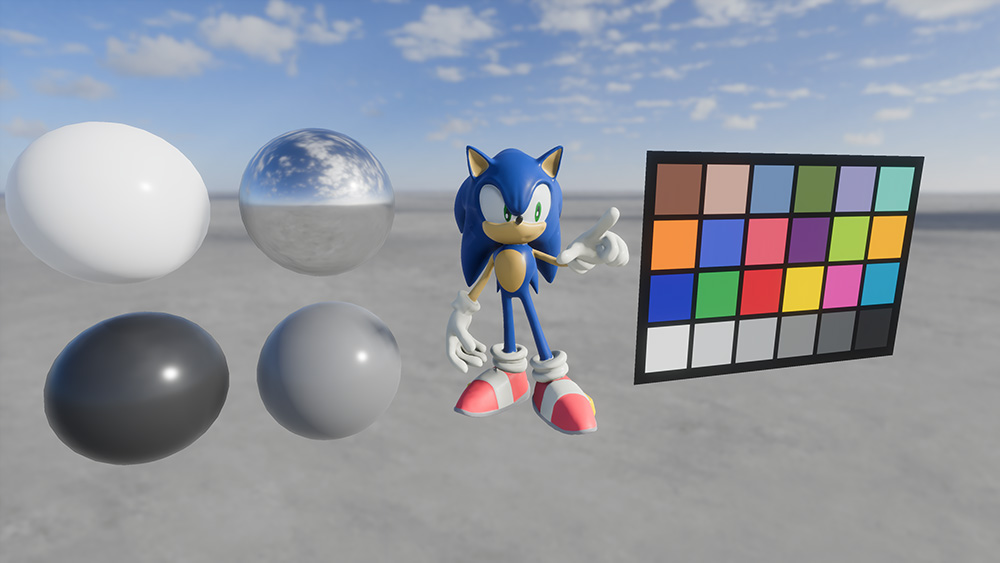
Real-time rendering of a figurine in an engine under development.
Q5Current Duties
Game engines have to meet a lot of different requirements. They need to render massive photorealistic environments spanning several kilometers. On top of that, they need to scale effectively across platforms ranging from handheld devices to high-end PCs. As the Lead Graphics Programmer on the engine development team, my main duties revolve around guiding the implementation strategy for graphics features with these points in mind. Adding more features creates more technical conflicts, increasing the number of tuning parameters and potentially leading to technical debt. I clarify priorities, make trade-offs, and look for the best overall solutions.