
\ Career Path /
Dabbled in many creative hobbies.
Q1What I Studied
Fun and entertainment have always been central to my life. In the past, I was a street performer, a magician, and even a LEGO enthusiast—to the point that I'd compete in tournaments. As someone who loves interacting with kids and creative work, I majored in early childhood art education, and I got a nursery teacher certification while designing play spaces. My interest in the game industry started during my practicum, where I realized that games played a natural part in the lives of those kids.

Q2Why I Joined SEGA
I mainly applied to toy companies and got an offer from my top pick, a major manufacturer in the industry. But the reason I picked SEGA was because the interviews and internship program exceeded my expectations. I knew I'd have lots of fun working here. Beyond games, SEGA operates a wide variety of businesses within the world of entertainment, and the wide range of possibilities excited me.
Q3My First Assignments at SEGA
I was a level designer for SONIC X SHADOW GENERATIONS. The challenge stages I made would only take between a few seconds to a minute to complete, but I still played a direct role in making the game fun even as a new hire. I would approach my work from both a developer and player perspective throughout the process. Along the way, I learned about the difficulties that come with making Sonic levels and the joys of creating them from scratch.
Q4Biggest Surprise After Joining SEGA
I figured new employees at a large company like SEGA would first build experience through basic tasks. But I was pleasantly surprised that they let me work on level design for SONIC X SHADOW GENERATIONS just after joining. SEGA is open-minded. This is a workplace that offers tons of opportunities and lets newbies challenge themselves.
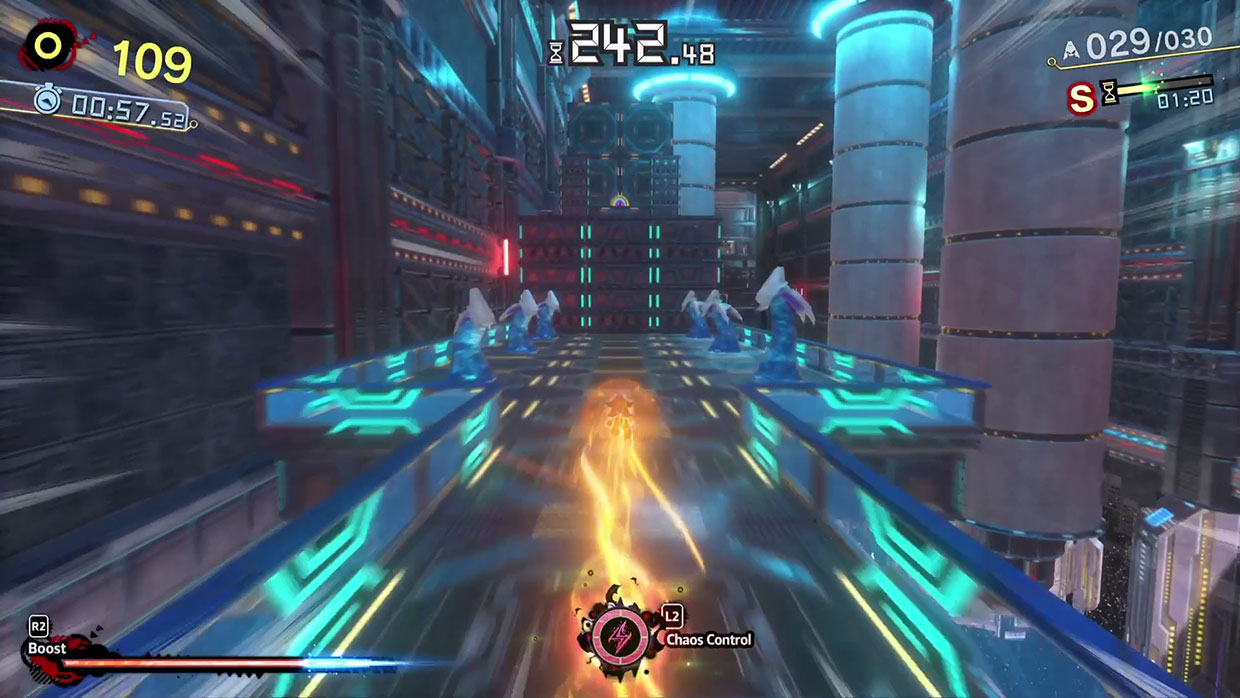
A stage from SONIC X SHADOW GENERATIONS
Q5Current Duties
I primarily work on stage layouts and other aspects of level design. Simply put, I build places where people can play. There are established principles regarding how gameplay should flow. However, the challenge lies in finding creative ways to utilize those principles. In the case of Sonic, I start by placing objects and terrain in a way that doesn't hinder the core concept of Sonic: speed and acceleration. Rather than the challenge stages I was handling early on, my role has expanded to a broader set of tasks. Instead of individual gameplay segments, I consider how the parts fit into the game as a whole. That makes the work more challenging, but also more rewarding.