
EMPLOYEE INTERVIEWS

Studio Head

Combining individual strengths, using instinct and logic, to take on the world

Joined in 1993

1st Development Division
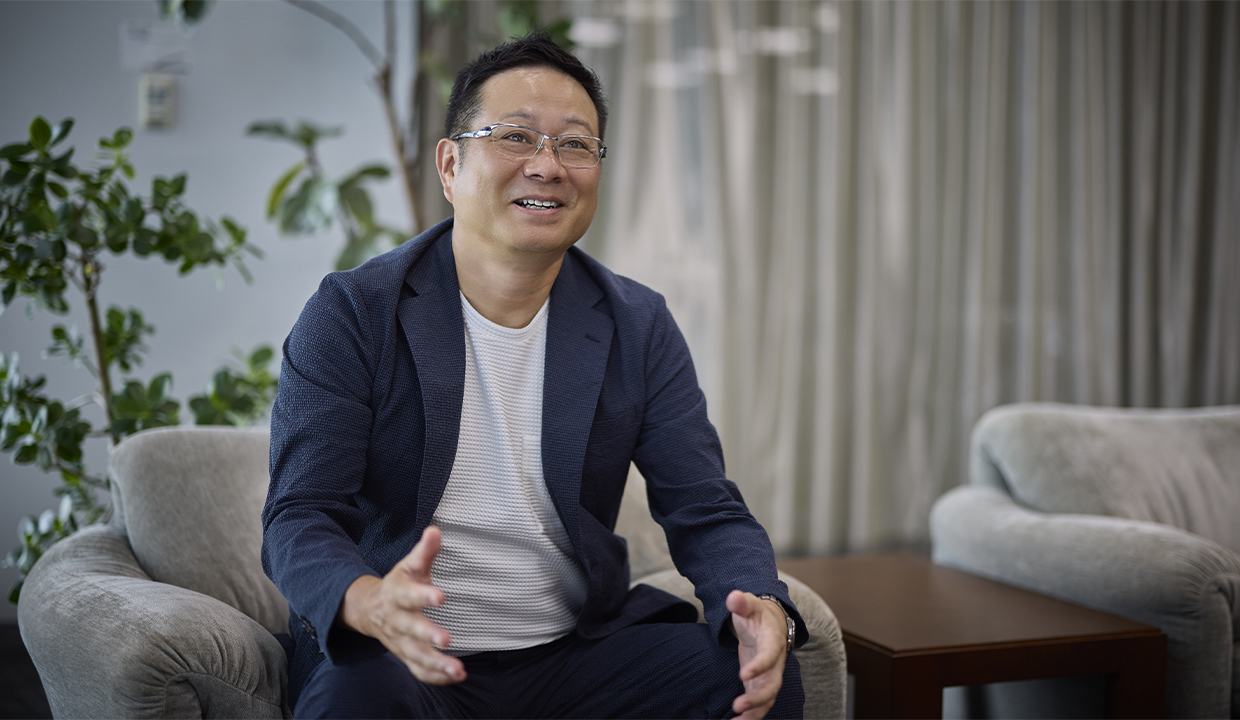
Studio Head Osamu Ohashi

Q1
Our Studio's Style

This studio develops a wide range of games and isn't bound by one genre. The Sonic series is at the heart of what we do, but the series encompasses much more than 2D and 3D action platforming. We've delved into open-world exploration, racing, and even sports, as we'd like to give players more and more ways to engage with Sonic. Outside of Sonic, we develop rhythm games, card games, and other content for arcades, as well as other works within SEGA's vast IP catalog like Puyo Puyo. In order to work across so many genres, we need to be specialists in everything we create. For example, SEGA has teams that have made racing games for more than 20 years, and we can incorporate their expertise into new projects. Because our specialist teams can collaborate with one another and with other studios, we're in a strong position to create a diverse range of games.

Q2
Our Studio's Values

I've never thought of myself as a genius. That's why I'm honest about my shortcomings and never hesitate to lean on my colleagues' knowledge and skills. I may have my own ideas, but if someone brings better ideas to the table, I'm happy to incorporate them. When people with different strengths come together, they attain heights greater than any individual can alone. That's why creating things as a team has meaning. Instinct and logic are also valuable tools in making decisions. If something makes sense on paper but doesn't feel exciting, I look into the root cause. If a concept clicks right away, I try to find the words to express the logic behind it. Rather than imposing my ideas upon the creative team, I'd like to share my reasoning, listen to everyone, and draw out the group's potential. I value this method of bringing out the best in everyone to make the best games possible.

Q3
Success Stories

The Sakatsuku series as one of my greatest successes. As its lead game designer, I oversaw planning, and back then, a soccer management sim was unheard of in the industry. Until we reached the beta stage, I worried that the game might not be fun, and other team members felt that the game might not catch on. As I mentioned, making games means drawing wisdom from the people around you and working with different opinions to make the right decisions. But sometimes, even after all of that, the answers might not be clear. When that happens, someone has to make a call and take responsibility. I encouraged the Sakatsuku team to have faith that it'll turn out fun, and the game was a hit. This experience taught me how to make the most of everyone's strengths and stand behind my decisions, taking responsibility for the results.

Q4
Personal Goals for the Future

Most of us aren't geniuses. However, if we recognize everyone's strengths and come together, teams can achieve results that won't lose out to those of a genius. I'd like to instill this mindset throughout the studio. It's important that our organization doesn't center around any one person, but instead brings out the best work in everyone. In that kind of environment, new leaders and new teams can emerge, making us even stronger. Right now, my priority is to create that kind of positive flow.

Q5
Studio Goals

Our studio aims to keep making titles worthy of Game of the Year. We do not want to win an award once and stop there. We'd like to earn our place worldwide as a studio that continuously delivers quality experiences. To do that, we need to measure ourselves against the world's top studios and understand our current standing. SEGA's development expertise, knowledge, and wealth of IPs like Sonic are strengths that set us apart. We also have to acknowledge what we lack and actively learn by training externally, bringing in guest lecturers, and hiring people with international experience. In sharpening our strengths and reaching a global standard, we intend to go up against—and beat—the best in the world.

Q6
Message to Applicants

I want the people who work on games at SEGA to be the sort of people who don't get lost in the crowd—people who know what they want to do and what sort of games they want to make. Naturally, you should be able to do what's requested of you, but beyond that, you should always be thinking about how you can make it better, how you can make it more fun, and create output that surpasses expectations. There are lots of areas in game development where the right answer isn't clear. In the end, you have to have the internal motivation to persevere, you have to want to make the game fun and bring joy to people. So bring those kinds of powerful ambitions to SEGA, and do things here that only you can do.

Q7
A Recent Highlight

Recently, I saw Japan's match against Brazil at the World Cup. Japan scored first, and I was impressed by how they scored. They had evolved, in terms of both personal skill and team play, and they'd reached a point where they were even able to score against a powerhouse like Brazil. And it was the culmination of decades' worth of effort. The current strength of the Japan team doesn't come from a single star player, but from sustained long-term effort and the creation of a culture that welcomes challenges. I think game development is similar. To continually put out great games, you need more than individual talent. You must develop people, you yourself must grow your expertise, and you must create a studio culture where risk-taking is admired. Creating and maintaining that kind of environment is a key part of my job.

[an error occurred while processing this directive]