
\ Career Path /
Designed complex props and assembled buildings from modules.
Q1What I Studied
I went to a vocational school in Japan for game design, and studied concept art and background modeling. My assignments focused on coming up with game worlds and stories, then trying to communicate that information as best I could in a single visual. I put a lot of energy into environmental narrative, which is about tying the game story into backgrounds and environments. I made use of culture and art from many different countries in my concepts and designs.

Q2Why I Joined SEGA
I was drawn to SEGA by their willingness to flexibly adopt new techniques and approaches, and to take on the challenge of creating new games. I felt that I could build the kind of career that I'd envisioned for myself, applying the environmental narrative skills I'd learned in school and getting hands on with production methods that linked concept art to modeling. They also have good benefits and a system that makes it easy to take time off, so I knew I would be able to feel at ease and focus on my work.
Q3My First Assignments at SEGA
I started out as a background modeler, making relatively simple props like bottles and chairs. Then I was asked to create buildings as well, assembled from existing modular assets—walls, pillars, doors, things like that. I learned how to create different shapes and silhouettes using the same assets, balance efficiency with visual differentiation, and fundamental approaches to creating backgrounds.
Q4Biggest Surprise After Joining SEGA
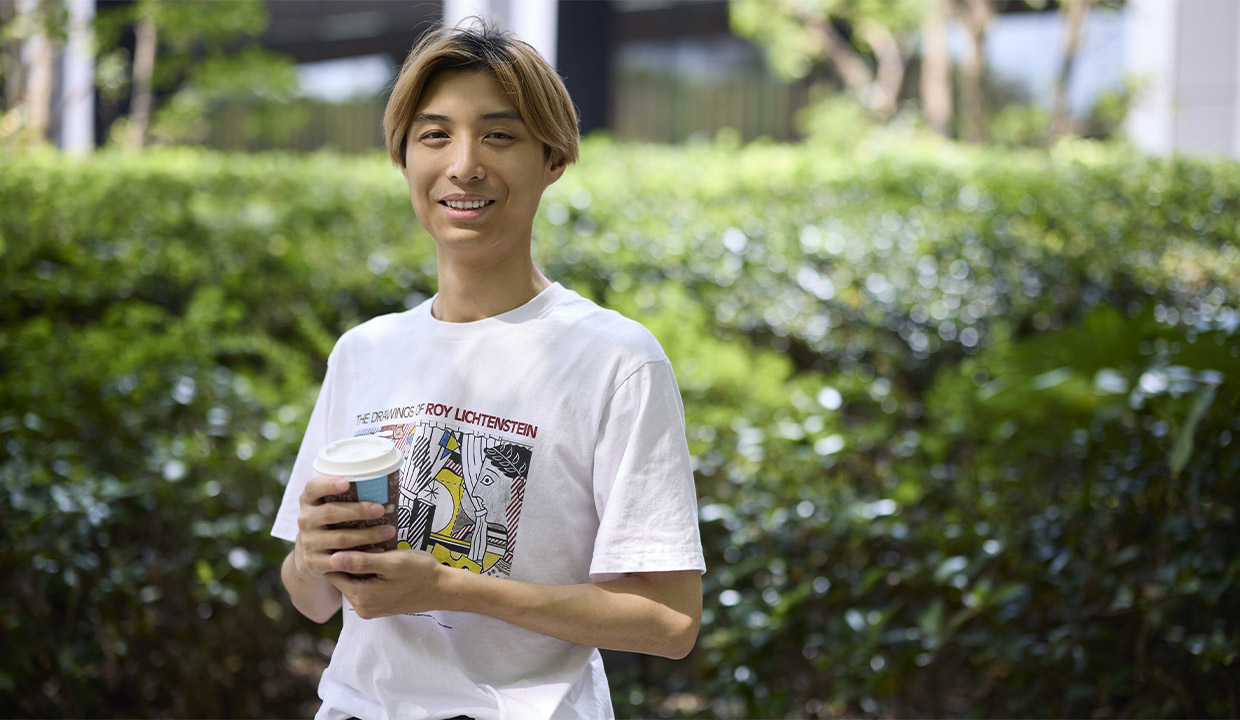
Contrary to the image I had of Japanese companies before joining SEGA, everyone was surprisingly approachable, regardless of seniority or position. Since I'm from overseas, I was particularly worried about having to use formal Japanese and phrasing things correctly. Thankfully, it ended up not being a big deal, and my mentor and boss are always happy to listen to what I have to say. It's a really welcoming environment where I feel free to share my ideas and workstyle without hesitation. I've even had fun chats with some of the managers about my hobbies.
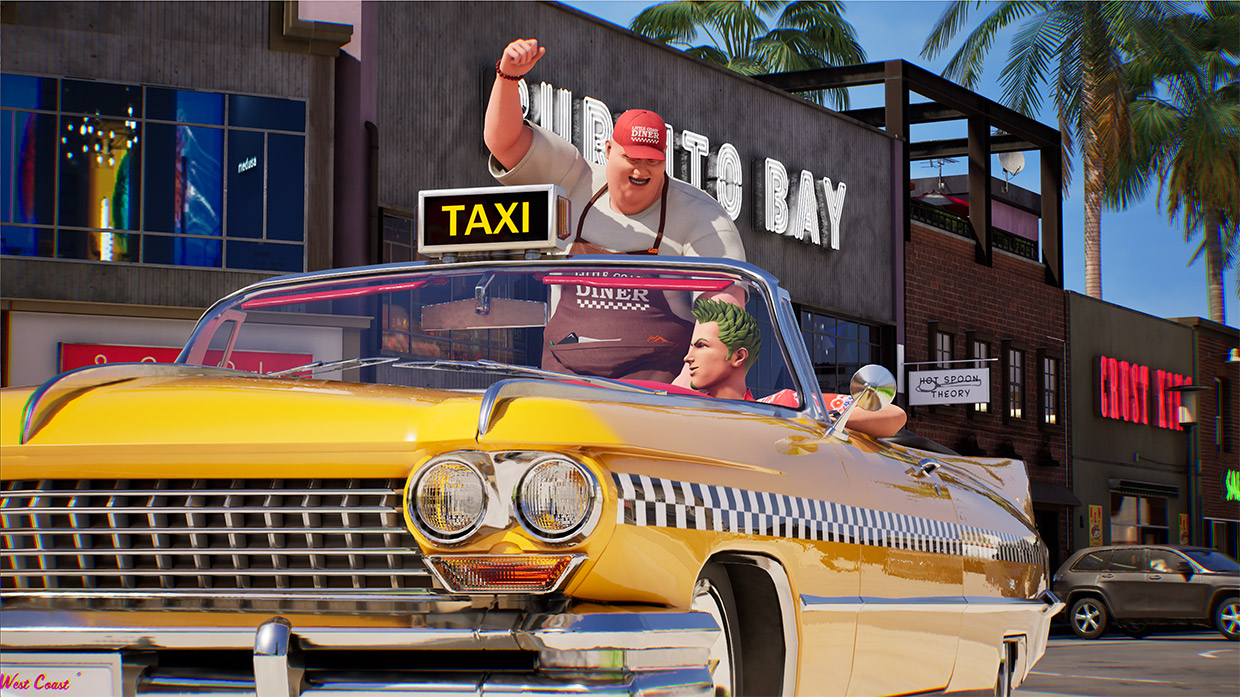
Image from Crazy Taxi: World Tour. Since joining, C.S. has created backgrounds and characters for the project.
Q5Current Duties
I create stages for titles in development. First I confirm the planning and specs for the game, then I use the playstyle and in-game look as a basis for proposing a visual direction, using concept art to illustrate. It's crucial to have a design that directly communicates in-game information—that a wall can be destroyed, for example. Then I make the necessary props and modules, and create the stage layout and lighting. In cutscenes, I also pay attention to composition and characters' appearance to enhance the overall quality.