
\ Career Path /
Aspires to become a Technical Artist.
Q1Before Joining SEGA
After graduating from college, I worked for about 20 years as a Motion Designer at multiple developers. That experience covered a wide range of games, from arcade to console and mobile. As I hit the middle of my career, I started taking on other tasks as well, like building rigs, developing scripts and other support tools, and building pipelines.

Q2Why I Joined SEGA
Around the time I started thinking of becoming a technical artist, a job ad for the Motion Capture Studio caught my eye. As a motion designer, I'd worked on a lot of different tasks over the years, and motion capture was about the only thing I'd never done. To round out my time as a motion designer, I figured I had to work with capture data at least once, so the SEGA position was a perfect fit.
Q3My First Assignments at SEGA
I worked mostly on post-processing for capture data when I first joined. That involves smoothing out motions by cleaning up marker jitter and other noise. I'd worked with MotionBuilder before, so it was a smooth transition on the technical side of things. In my previous job, I'd worked on hand-keyed animations, creating movements from scratch, so every work process was new.

Q4Biggest Surprise After Joining SEGA
What surprised me at first was how focused everyone was on a single goal: making the best games possible. I've worked in the games industry for a long time, and more often than not, deadlines are prioritized over quality. At SEGA, there are absolutely no compromises when it comes to quality, to the point where we have motion designers who specialize in certain dance styles because we want to be sure to get the dances right. We'll spend a whole day—or more—making fine adjustments to smooth out knee motions. Long, long ago, when I was fresh out of college, I had a lot of passion for the games industry, and that's come roaring back at SEGA.
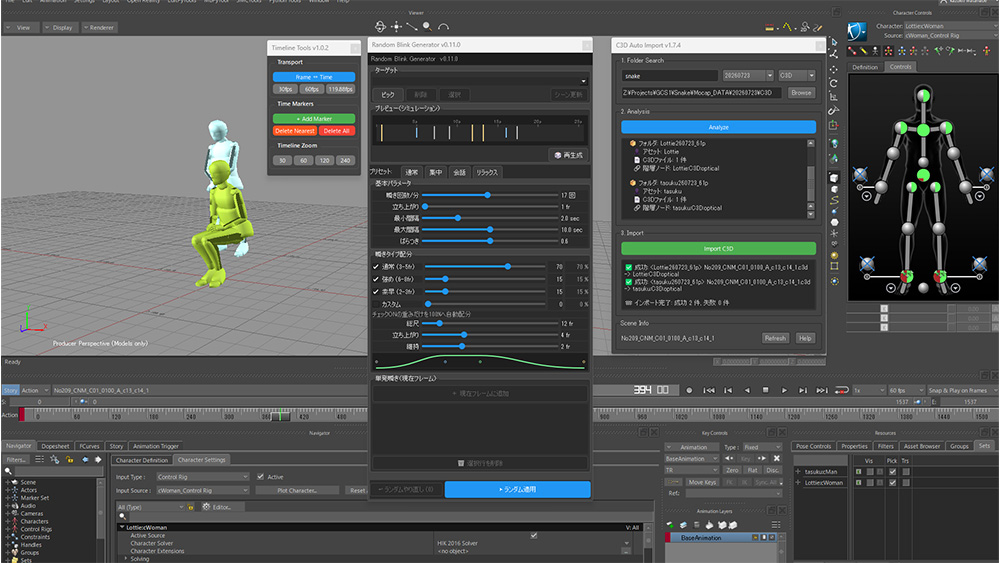
My team creates tools that run on MotionBuilder, which is the main software we use at the Motion Capture Studio.
Q5Current Duties
Right now I do checks for motion capture post-processing, create final data for submission, and design tools to improve operational efficiency. Motion designers have to sift through mountains of capture data. There are dozens of takes for each motion, and long cutscenes can run for several minutes. We process out noise from all the data for the characters, which involves a lot of repetitive work, so we improve efficiency by automating certain tasks.