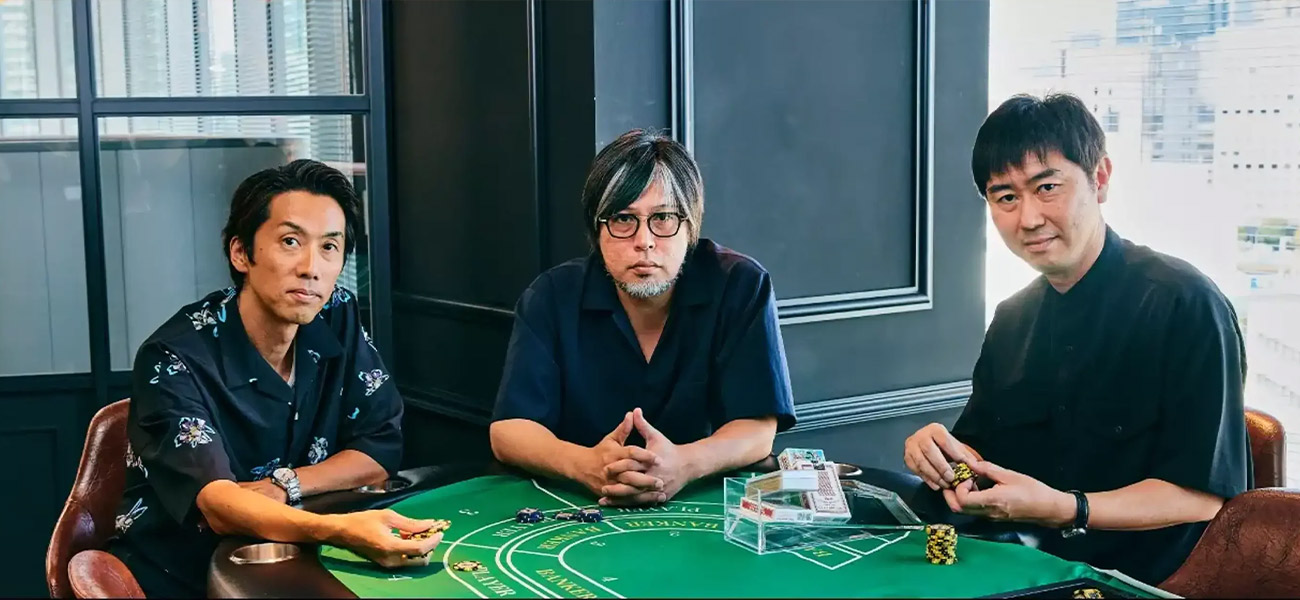
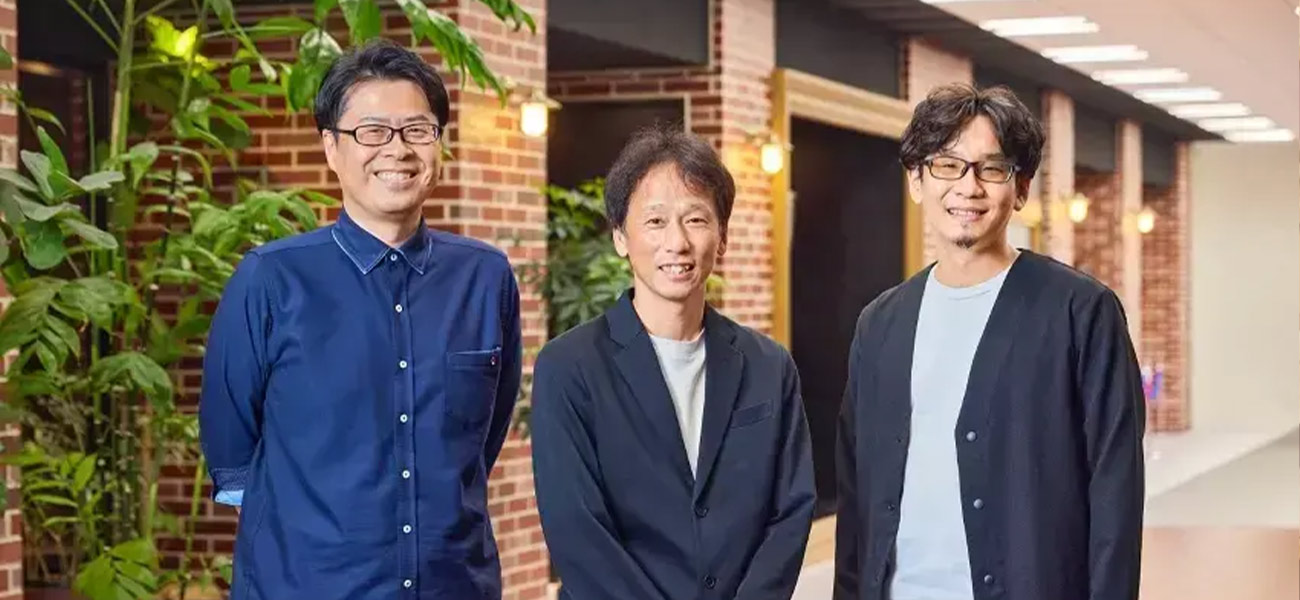
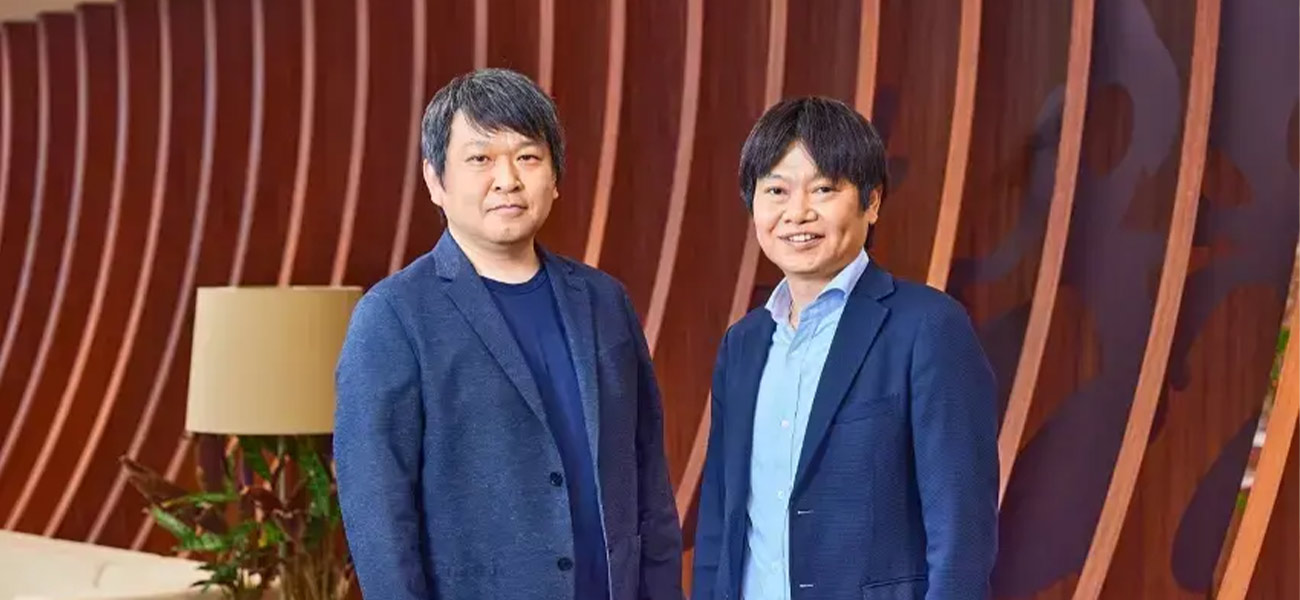
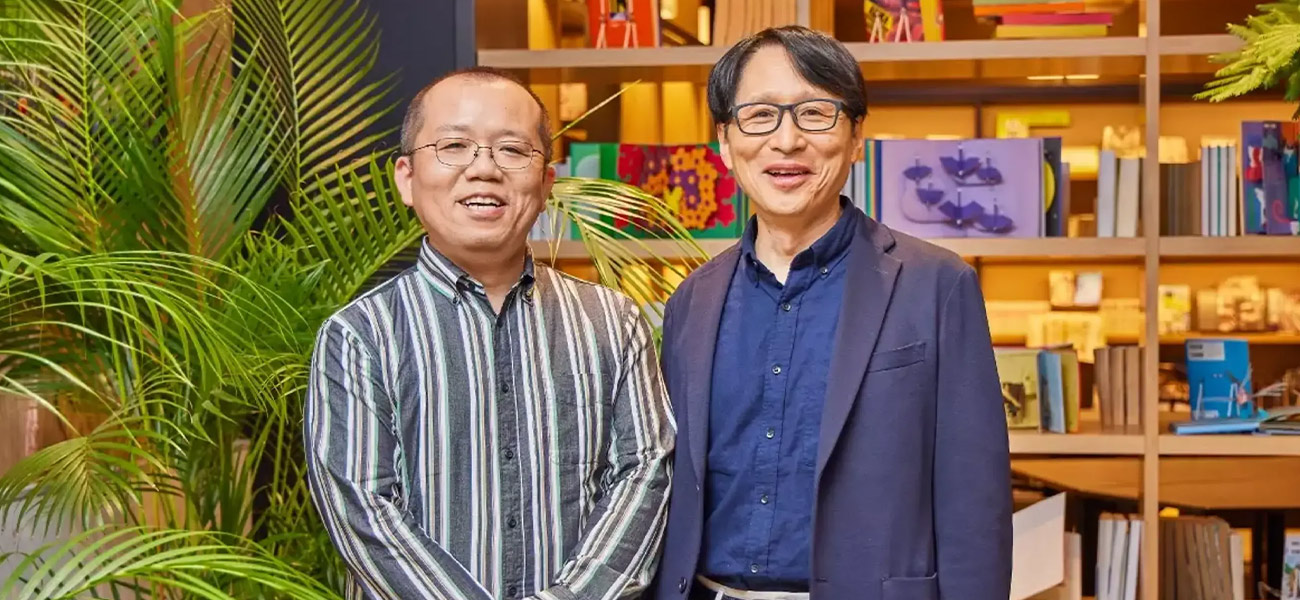
4th Development Division Vice Executive ManagerKatsuya Hisai
Joined in 2008. Started out in the Sports Design Research & Development Division as a new graduate. Became Vice Executive Manager in 2025 after SEGA Networks's merger with SEGA. Concurrently serves as the manager of the 4th Online Research & Development Game Design Department.
4th Development Division Vice Executive ManagerShingo Kosuge
Also serves as the manager of the 4th Online Research & Development Produce Department. Joined in 2017. Previously worked at another major gaming company. Owns and produces the HATSUNE MIKU: COLORFUL STAGE! IP, while working as a senior producer on upcoming mobile titles.
Breaking Into the International Market Our Devotion to Global Games
SEGA has put out numerous hit games throughout the years. The task of bringing popular IPs to the global mobile gaming scene falls to the 4th Development Division.
Through their dedication to mobile games, this division delivers Japanese entertainment straight to phones worldwide. Standing at the forefront are the division's Vice Executive Managers since April 2025, Katsuya Hisai and Shingo Kosuge, key figures in the success of the company's most popular titles. Today, we'll be speaking with them about what goes on behind the scenes in creating games for a global audience and how they've built a workplace where everyone can thrive.
Two Trailblazers Shaping the Future of Mobile Development
Could you both please tell us about your backgrounds?
Hisai
I joined SEGA in 2008, shortly after graduating. I got my start as a game designer on the Sakatsuku series and other console titles. From there, I moved into mobile when SEGA Networks was established.
After working ten years there, I returned to SEGA and took on my current post as the 4th Development Division's Vice Executive Manager this fiscal year. I've had the fortune of being in mobile development for quite some time, and many members of my team learned much of their fundamentals from their time at SEGA Networks.
Kosuge
I joined SEGA in 2017, partway through my career. Previously, I worked at a major console game developer, where I spent several years as a producer. Since joining SEGA, I've mainly worked with mobile titles. What motivated my career move was SEGA's willingness to venture into uncharted territory.
After entering the company, I quickly stepped in as the IP owner and producer in charge of launching HATSUNE MIKU: COLORFUL STAGE! This fiscal year, I became the Vice Executive Manager of this division and the manager of the Produce Department.
Could you tell us a bit about the 4th Development Division?
Hisai
Our team has always specialized in mobile and free-to-play (F2P) titles, so we've been building on that expertise by developing games for multiple platforms. Our aim is to connect with more players around the world. We see it as our mission to create polished game experiences. While there are countless games on the market, many of them simply swap out the IP and recycle the same mechanics. Of course, that approach has also brought us much success, but with the market evolving, you can only keep that up for so long. It's the 4th Development Division that's tackling the issues of substantive game development.
Kosuge
As we make games, we aim to not only think about what we might find fun, but to hone in on exactly what players will enjoy. I believe it's crucial to have a clear vision of what makes a quality game or service and the means to realize it.
We're especially committed to creating games that global audiences will be able to enjoy for years to come, so we really take our players' experiences to heart.
Community-Driven Game Development
What kinds of titles do you develop?
Hisai
Recently, our main focus has been on developing new titles. One example is SEGA FOOTBALL CLUB CHAMPIONS, the latest game in the Sakatsuku series, which I'm currently producing. When going into a project, my top priority is identifying what fans of the IP are expecting or hoping for from the game.
While SEGA FOOTBALL CLUB CHAMPIONS uses a free-to-play model, we set out to reproduce the same magic of playing the older Sakatsuku console titles. Our approach is to ensure fans of the series instantly recognize the game the moment they start playing it. You could say that much of what we do is guided by our fan base.
Does that mean you've been engaging with fans since before the release?
Hisai
Yes, whenever we unveil new information, I'll actively look for player feedback on X (Twitter) and other social media platforms, making fans a vital part of the development process. From a business standpoint, free-to-play games have limitations and qualities that set them apart from traditional console games. Some core features of the Sakatsuku series simply aren't feasible. So, we're constantly thinking about how to strike the right balance.
This is something we work closely with the Online Mobile Publishing Division on. When we make adjustments to the game, we factor in their input and evaluate what features would be essential for scalability. It's tough but immensely rewarding.
Why do you feel it's so important to engage with player feedback?
Kosuge
SEGA has never shied away from taking on new risks, but when things go awry, it forces you to reassess your approach.
Whenever we encountered those issues, we'd pull inspiration from one of our development partners. They centered their decision-making around the players' experience and continued to produce outstanding content. I originally entered the gaming industry with the same mindset, wanting nothing more than to create entertaining games. But over time, you find it harder to cling to that ideal. Seeing our partner's efforts up close brought me back to my roots. At the end of the day, we all love making games, so we should be able to follow their example.
SEGA's Unique Approach to Multi-Platform Releases Worldwide
What do you have to consider when releasing games for the international market?
Kosuge
In today's globalized world, games created in Japan won't be well-received if they're released as is. Every country has different playstyles, cultural norms, and purchasing habits. Because of that, we make sure to consider whether players in each region can enjoy our games to the fullest.
Even tiny details can make a huge impact. We try to picture ordinary, day-to-day things, like what kids in America might do for fun. It's true that Japan differs in many ways, but it also has a lot in common with the rest of the world. We shouldn't be intimidated about going global. Engaging with our fans around the world and embracing other cultures is important.
What is your approach to multi-platform support?
Hisai
From the outset, we design all of our games with multi-platform support in mind. Some of our mobile games have already been ported to PC. Expanding our titles across mobile, PC, PlayStation, and other platforms lets everyone from casual gamers to pro players enjoy them. As our titles grow, we're constantly exploring new options to meet our players' needs. For instance, we've added matchmaking settings to address their concerns that the difference in device capabilities could create unfair matchups in competitive action games.
What game genre best showcases the 4th Development Division's strengths?
Hisai
Multiplayer action games, like our very own Sonic Rumble, come to mind. They're fast-paced with many players moving around at the same time.
The movement feels particularly satisfying. If you've played a SEGA game before, you'll know exactly what I mean. The Sonic series is a great example of SEGA's strengths—it's a legendary title known for its smooth, intuitive controls that make it feel great to play. This isn't something that can be easily replicated.
Kosuge
We can't forget our passionate community either. Since the players are our main focus when we make games, we devote much of our efforts to building an in-game community. This includes features like guilds, chats, and team-based battles. When we include our community outside as well, you can really see how SEGA strives to bring players together.
I believe this ability to build games that encourage players to connect is our greatest asset.
The Difference in Japan's Development Style
With the rapid growth of Chinese game companies in recent years, do you ever find inspiration in other companies?
Kosuge
We do, but rather than blindly adhering to someone else's approach, we reexamine our strengths and center our next course of action around them. For example, we might decide that competition in a certain corner of the market is too intense, and that it's better to step back, look at the bigger picture, and restructure our portfolio.
Have you worked with overseas game companies before?
Kosuge
Yes, in fact, the Finnish game studio Rovio Entertainment, best known for the Angry Birds series, joined the SEGA Group, and we are currently developing some titles together. That said, we don't believe that completely adopting overseas development methods would necessarily lead to success.
For starters, our work culture, legal system, personal values, and decision-making processes are completely different. I see tremendous value in the unique way Japan collaborates during game development. While it can be time-consuming, I believe it's Japan's forte.
So, I take it that you also learned quite a bit from Rovio's development style?
Hisai
Yes, that's right. European studios rigorously test their games prior to release and gradually implement improvements based on the feedback they receive. When the prospects for a project don't look favorable, they'll pull back as a natural course of action.
While this isn't typical for Japanese game companies and we wouldn't adopt their entire process, we've been trying to apply some of it to certain projects.
The Impact of AI on the Frontier of Gaming
How are you utilizing AI to improve your technical capabilities?
Hisai
We're working on several AI initiatives at the moment. In fact, some of our existing products already incorporate AI to some extent, and we're actively investigating other potential uses.
For example, to boost our efficiency, we've been using it to generate 3D character models. Our latest title required a significant number of 3D models for its fictional football players, and creating them manually would have taken an exorbitant amount of time. By using generative AI, we were able to produce these characters much more efficiently, and since last year, we've begun to see its commercial potential.
So, alongside using AI to support development, you're also applying it in-game?
Hisai
Yes. For instance, we've been exploring avenues to provide in-game commentary through AI. In many of SEGA's multiplayer action titles, spectating is becoming an increasingly integral part of the game.
However, it's currently a bit hard to gauge whether the people spectating would find the experience enjoyable. We could potentially improve this by adding live commentary to take us through what's happening in a match, to give one example. That's where AI commentary could potentially shine. There's still a lot of work to be done to make it a reality, but we're seeing progress.
So you're implementing AI for the sake of both the developers and the players?
Hisai
Especially the latter. I'd like to use AI in areas more directly tied to the user experience going forward. Having said that, as it is now, AI isn't perfect. It can bring about many technical challenges, and we're constantly grappling with how to strike the right balance to ensure the game remains genuinely enjoyable. Attitudes towards the adoption of generative AI also vary by region. Given our many overseas endeavors, we need to tread carefully.
A Team That Puts the Genesis in Creativity
What kind of people do you think would be a good fit at SEGA?
Hisai
SEGA's an extremely flexible company, so I think self-motivated people would really enjoy it here. SEGA embraces a wide range of perspectives, and I feel that this openness and depth of support are what have allowed me to grow and come this far.
If you have the right drive, you'll find this to be an environment where you can share your ideas. You don't need to bottle things up or carry out top-down instructions without question. People who can share their opinions, think cooperatively, and work as a team are sure to thrive here.
And of course, true to our motto that "Creativity is Genesis," it's an environment where you can fully immerse yourself in creative work. For those who want to engage deeply with their creations, it's a genuinely fulfilling place to be.
Will you be given the chance to speak up if you have any ideas?
Hisai
That's a great question. We regularly hold pitch competitions and ask people to brainstorm around certain concepts or IPs. If you take the initiative to put forward ideas, you'll be given a chance regardless of your role.
Kosuge
Given the sheer scale of development these days, it takes everyone's help to bring it to fruition. If you're the type of person who enjoys working as a team and bringing positivity to the workplace, you'll make strides in no time. As a company, we believe that everyone deserves a chance, so people who have great respect for others would fit in. I'd also like to add SEGA has a unique portfolio; we collaborate with animation studios, film companies, and other companies under our group umbrella. People who want to test their skills in all kinds of fields, not just mobile gaming, would be suited for work here.
Overseas Opportunities for Developers
Could you walk us through what someone's career might look like after joining the company?
Hisai
Our division has clear career paths for each position. Game designers, for example, can specialize in all sorts of fields, like level design or game design. By giving everyone a clear area to focus on, we make it easier for employees to set goals.
Through meetings with their managers, employees can discuss which skills they want to develop and the roles they envision for themselves, giving them a chance to map out their own career path. Of course, employees can also pivot to become a producer, game designer, artist, or programmer. No matter their choice, we'll offer them the same support.
Kosuge
Mid-career hires work in a similar way, but they'll be assigned a role based on their experience.
Hisai
It's important to note that the initial development phase for games can take anywhere from 2 years to 4 or even 5 years. There were issues in the past where the work didn't stop once the game went live, which had people stuck with the same project for many years. That's why we've established a rule that allows employees, especially younger ones, to periodically rotate between projects, which has created this environment where everyone can develop the technical skills and career.
Are there any chances to work globally?
Hisai
First, it's important to note that the projects we oversee are primarily developed at our studios in Japan. Rather than creating titles specifically for overseas markets, we focus on how to bring Japan-made titles to audiences around the world.
That said, we do offer opportunities to work overseas. We have opportunities available for our workers at our Los Angeles and London offices. We'll put up a posting within our division, and interested parties can go abroad after a screening and interview process. Several of our employees have taken on overseas roles this way.
Lastly, is there anything you'd like to say to those interested in joining SEGA?
Kosuge
We've heard a lot of people say that mobile gaming can be a challenging, but we don't share that view. In fact, Japanese game companies continue to release many interesting titles, and naturally, SEGA is also pouring effort into creating new and exciting games.
The mobile gaming market is still huge. While setting its sights on the global horizon, SEGA excels at fine-tuning every aspect in its mission to deliver an entertaining product. This is the ideal place for anyone who wouldn't back down from a challenge. I hope we get a chance to work together.
Hisai
In my case, I'd love to work alongside people who are hungry to build their technical skills and knowledge. The 4th Development Division offers a wide variety of learning opportunities, from the fundamentals to AI research, including the chance to exchange expertise and learn from other divisions. It's a wonderful environment for anyone who's looking to grow.
For game designers and producers in particular, having played a wide variety of games is more or less a given. Beyond that, having an area of expertise can make you an even stronger candidate. Even if your skill set is relatively specific, it can be a powerful asset if you've taken the time to master it. What's great about SEGA is that no matter your role, you can put your background to use in development.
* This article contains content from an interview conducted in October 2025.